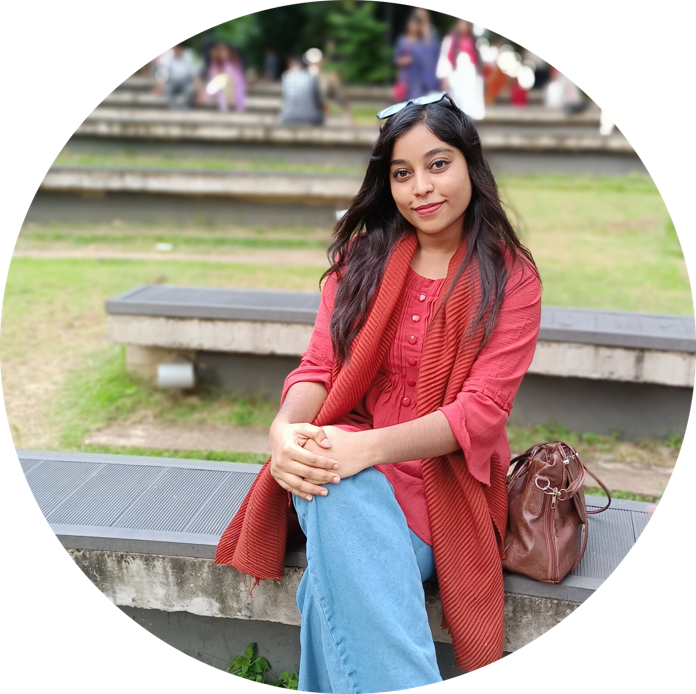
Sanjida Anjum Suchi
Geospatial Researcher
Program Details
- • Format: Blended (Online + Physical)
- • Physical Activity: 25–29 May 2026
- • Location: Madrid, Spain
- • Type: Intensive Program (BIP)
Host Institution
Universidad Autónoma de Madrid
Faculty of Philosophy and Letters
Ciudad Universitaria de Cantoblanco
Madrid, Spain
Online Seminars
- • Seminar 1: What is Overtourism?
- • Seminar 2: SOS Cities – Urban Impacts
- • Seminar 3: Environment & Society
- • Seminar 4: Student Experiences
Blended Intensive Program (BIP 2026)
Theme: Overtourism in Global Cities
Impacts, Challenges and Solutions
Program Overview
The BIP (Blended Intensive Program) titled "Overtourism in Global Cities: Impacts, Challenges and Solutions" was an interdisciplinary academic initiative examining the growing pressures of mass tourism on urban environments. The program was structured in two parts: preparatory online seminars and a week-long physical activity in Madrid, Spain (25–29 May 2026). Hosted by the Universidad Autónoma de Madrid (UAM), the aim was to analyse the social, environmental, and economic impacts of overtourism through fieldwork in Madrid's historic markets and a full-day excursion to Toledo, a UNESCO World Heritage city.
Online Seminars
What We Talk About When We Talk About Overtourism?
SOS Cities: Impacts of Overtourism in Urban Contexts
Tourist Traces in Overtourism Times: Environment and Society
Student Experiences
Madrid Week — Daily Programme
Mon 25 May — Orientation & City Tour
Welcome at UAM Campus, working group formation, UAM tour, and field analysis of Madrid's tourist spaces.
Tue 26 May — Markets & Madrid Río
Touristification of traditional markets (Pacífico, Antón Martín, San Miguel), Toledo prep session, and Madrid Río Tour.
Wed 27 May — Toledo Fieldwork (Full Day)
Full-day excursion to Toledo — analysing overtourism in a UNESCO World Heritage city.
Thu 28 May — Mentoring & Project Work
Faculty mentoring sessions and independent group project preparation.
Fri 29 May — Presentations & Closing
Group project presentations, evaluation, program closing ceremony, and farewell lunch.
Key Themes Explored
Touristification of Urban Space
How traditional markets, neighbourhoods, and public spaces transform under intense tourist demand, and the social displacement that follows.
Heritage Cities Under Pressure
Toledo as a UNESCO case study balancing the preservation of cultural heritage with the economic dependence on mass tourism.
Environmental Impacts
Carbon footprints of tourism, waste generation, ecological stress on sensitive urban environments, and the challenge of sustainable visitor management.
Community Responses & Solutions
Regulatory approaches, resident activism, alternative tourism models, and policy tools being tested in cities like Madrid, Barcelona, and Amsterdam.
Learning Outcomes
- • Understanding the causes, dynamics, and definitions of overtourism in global cities
- • Analysing the social, economic, and environmental impacts of mass tourism on urban communities
- • Conducting structured fieldwork and qualitative observation in live urban environments
- • Applying interdisciplinary approaches to tourism research and urban analysis
- • Developing collaborative research projects and delivering academic presentations
- • Engaging critically with policy responses and sustainable tourism solutions
Reflection
This BIP in Madrid offered a valuable opportunity to examine overtourism not just as an abstract concept, but as a lived urban reality. Walking through the transformed markets of Madrid, witnessing the crowds in Toledo's historic streets, and engaging with local perspectives provided a grounded understanding of how tourism reshapes cities — often at the cost of the communities that make them worth visiting in the first place. The interdisciplinary working groups brought together diverse academic perspectives, enriching the collaborative research process and the quality of our final projects.